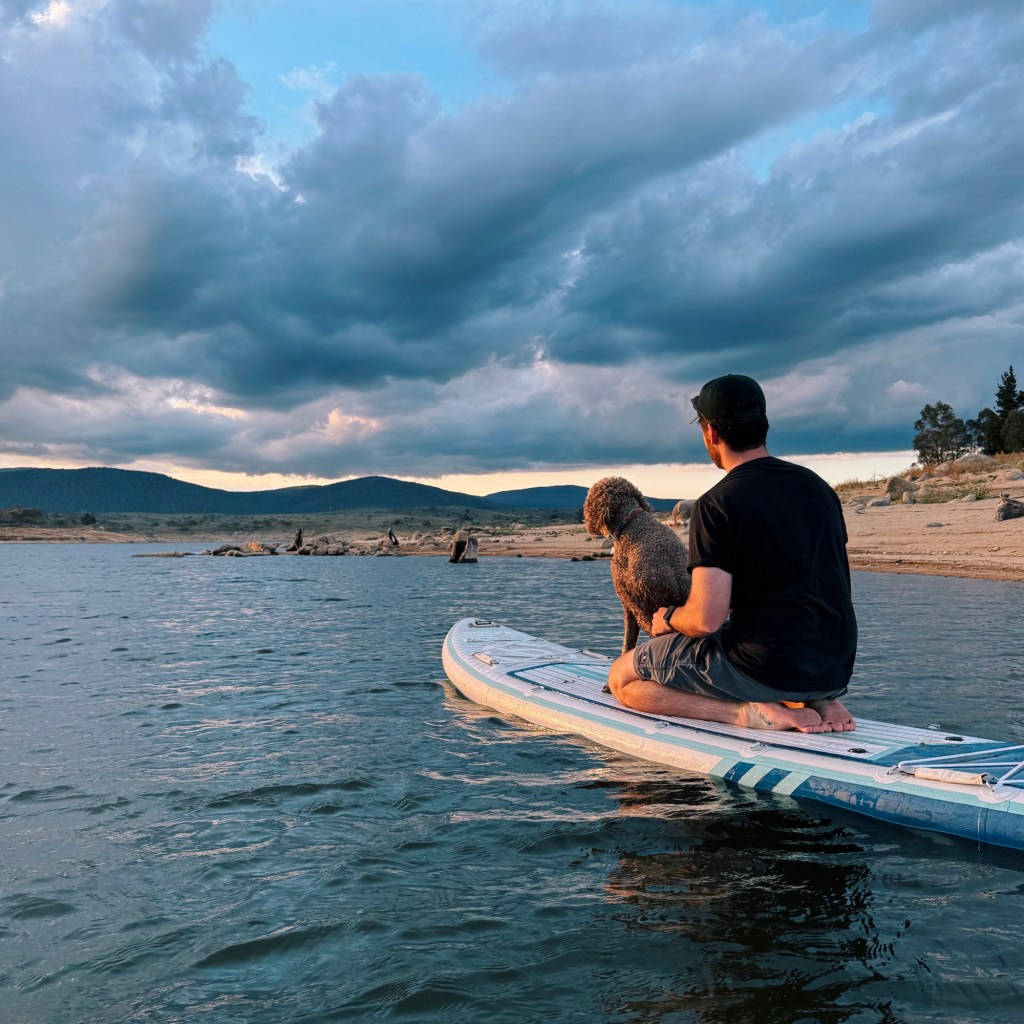
For years, I was on the never-ending search to find the perfect hiking partner. Someone who never complained about how long or steep the trail was. Someone who loved jerky as much as I did. Someone who always said YES to anything and everything. Just when I was about give up my search, we welcomed our dog, Bowie, into our lives.
From the moment he joined the family, Bowie has been a trail dog. Whether he’s racing beside our bikes or plodding next to us on a hike, he may not be able to voice his stoke, but you can see it in his big goofy grin and bouncing trot. He lives for adventure. And let’s be honest.. what dog doesn’t love being outside?
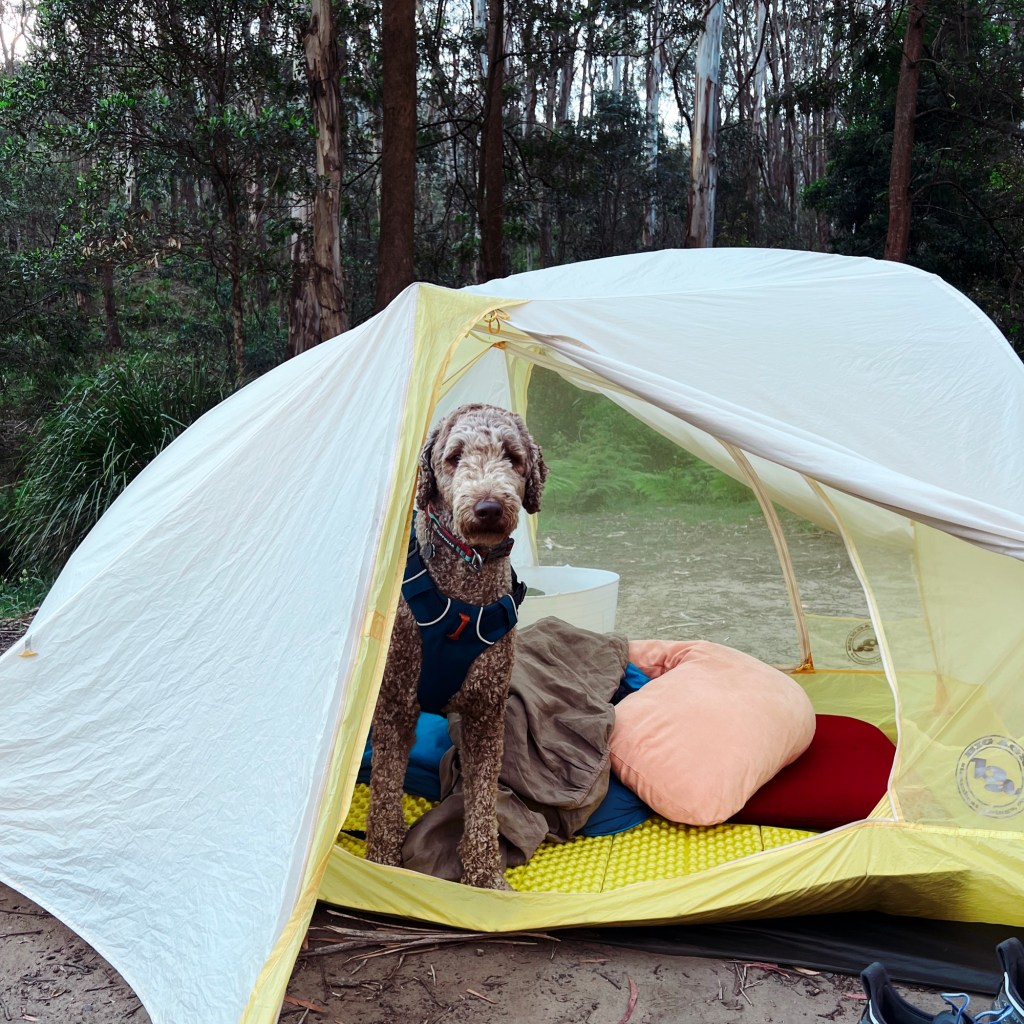
That said, taking your pup from couch to crag does take a little preparation to make sure everyone’s having a good time, especially on an overnight mission. Over the years, I’ve made plenty of mistakes (and destroyed a tent along the way), so let me save you the trouble with some tried and tested tips for hiking with your favourite four-legged friend.
Skip to
- Have an Emergency Plan (for them, not just you)
- Teach Trail-Specific Commands
- Get Them Used to the Trail
- Practice Good Trail Etiquette
- Build Up the Distances
- Dog Overnight Hike Packing List
- Risks to be Aware of on Trail
About Our Dog
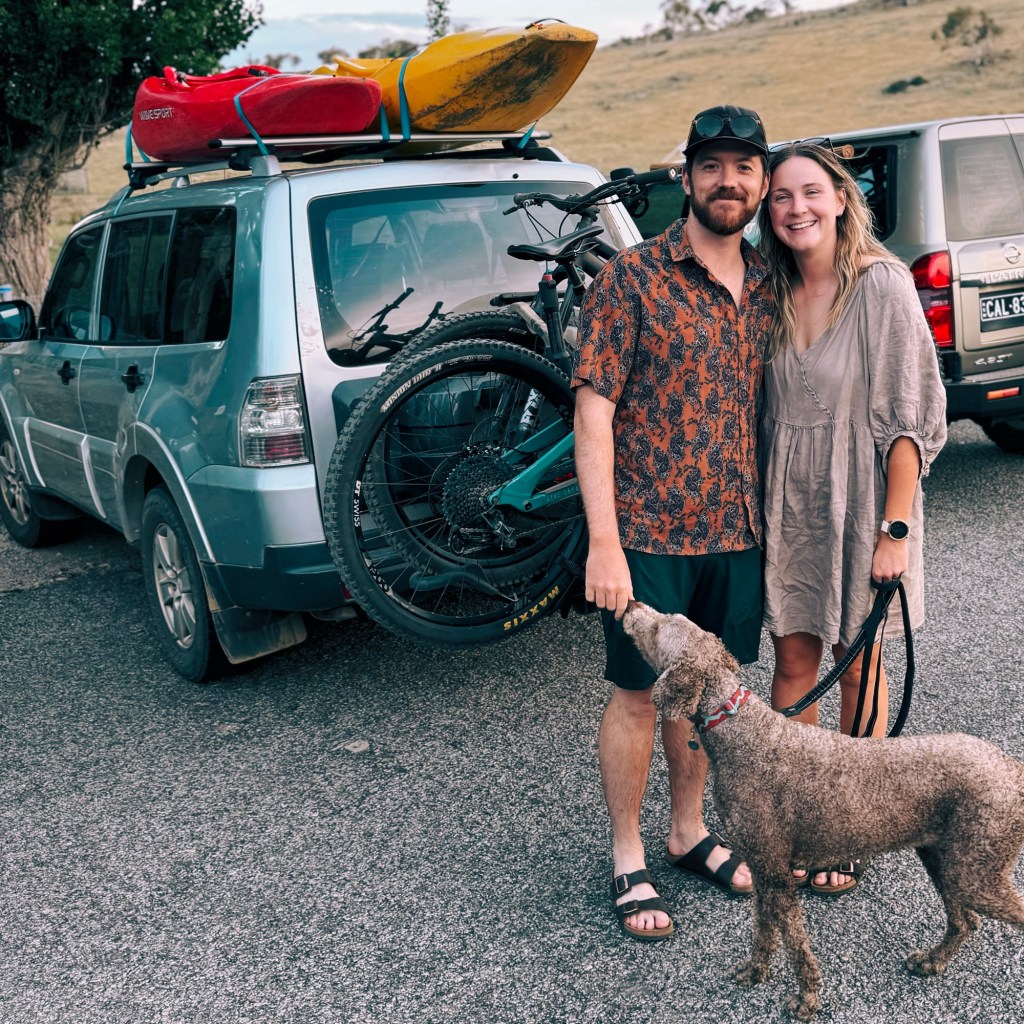
Bowie is a five-year-old, 23kg chocolate (now mottled) labradoodle. We’ve had him since he was a puppy. He was a COVID dog, so we trained him all on our own (no puppy school was open back then). Although I make him out to be the perfect pooch, like most dogs-mums, I know I have rose coloured glasses.
1. Have an Emergency Plan (for them, not just you)
We all (hopefully) carry a personal locator beacon (PLB) or some kind of emergency communication when heading out bush. But here’s the thing: no rescue chopper is coming just for your dog. And that sucks, because I’d be pressing the button real quick if anything happened to Bowie.
So, what’s the backup? Think ahead. If your dog gets bitten by a snake or hurts their leg leaping off a rock, you need to be ready to get them out. For smaller dogs, this isn’t much of a hassle. For bigger dogs like Bowie (a solid 23kg of muscle, fluff, and attitude), I’ve practiced carrying him over my shoulders (fireman’s carry) for short distances. For longer hauls, I’d empty my pack of gear, stash it off-trail to collect later, and wedge him safely inside. It’s not elegant, and he absolutely hates it, but it works. It might just be the difference between a scary situation and a safe return.
2. Teach Trail-Specific Commands
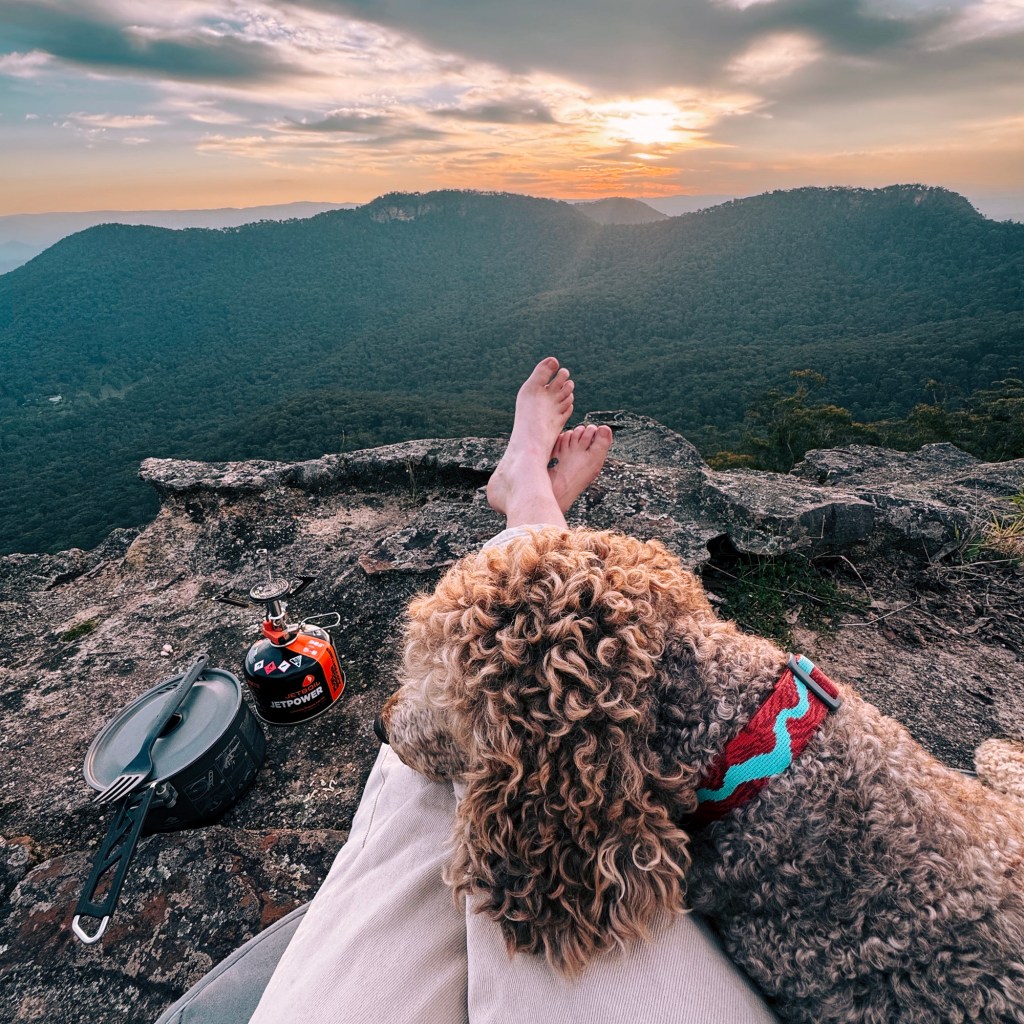
Sure, “sit” and “stay” are nice. But they don’t exactly help when you’re scrambling up a steep, rocky gully and your dog’s looking at you like, what do you want me to do? We’ve added a few hiking-specific cues to Bowie’s vocabulary; my favourites are “over” and “under.” Over a rock. Under a fallen tree. Over a bridge. Under a fence. It’s amazing how much smoother the trail feels when your dog knows what’s being asked of them. We practice these commands on daily walks, turning our suburban strolls into little training missions. Park benches, boulders, even kids’ playgrounds (outside of peak hours, of course!), anything becomes a mini obstacle course.
3. Get Them Used to the Trail
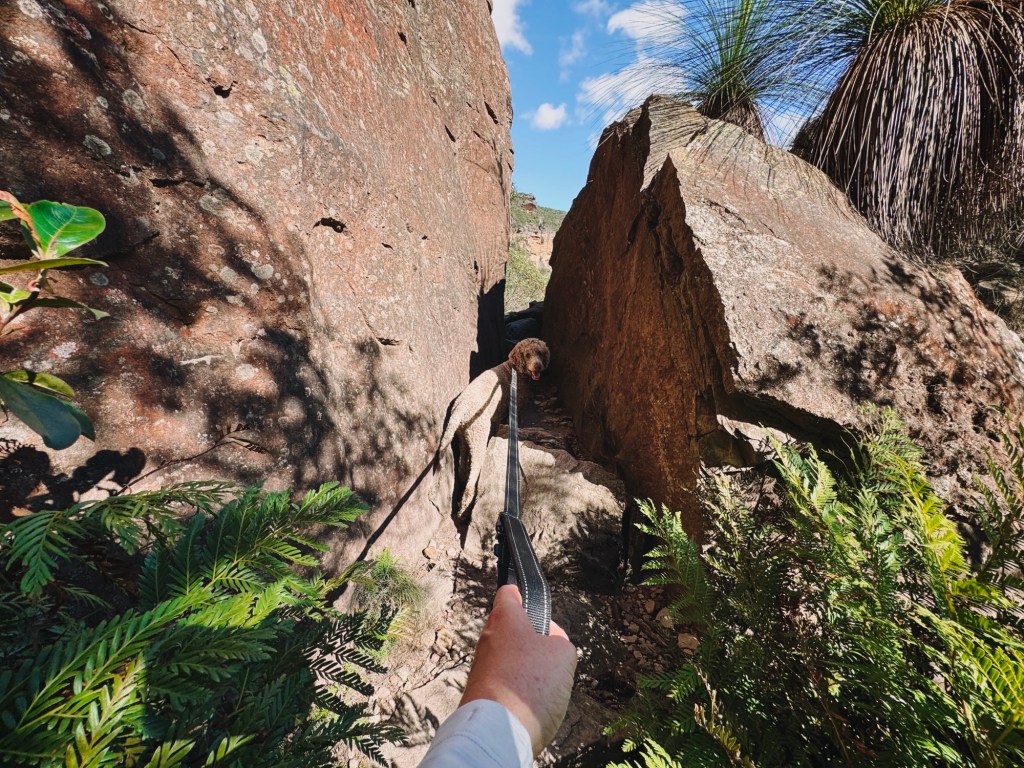
For a pup used to polished floorboards and dog parks, the real outdoors can be a sensory overload. Squelchy mud, crackly dry bush, cold streams, noisy birds, weird wallabies bouncing past.
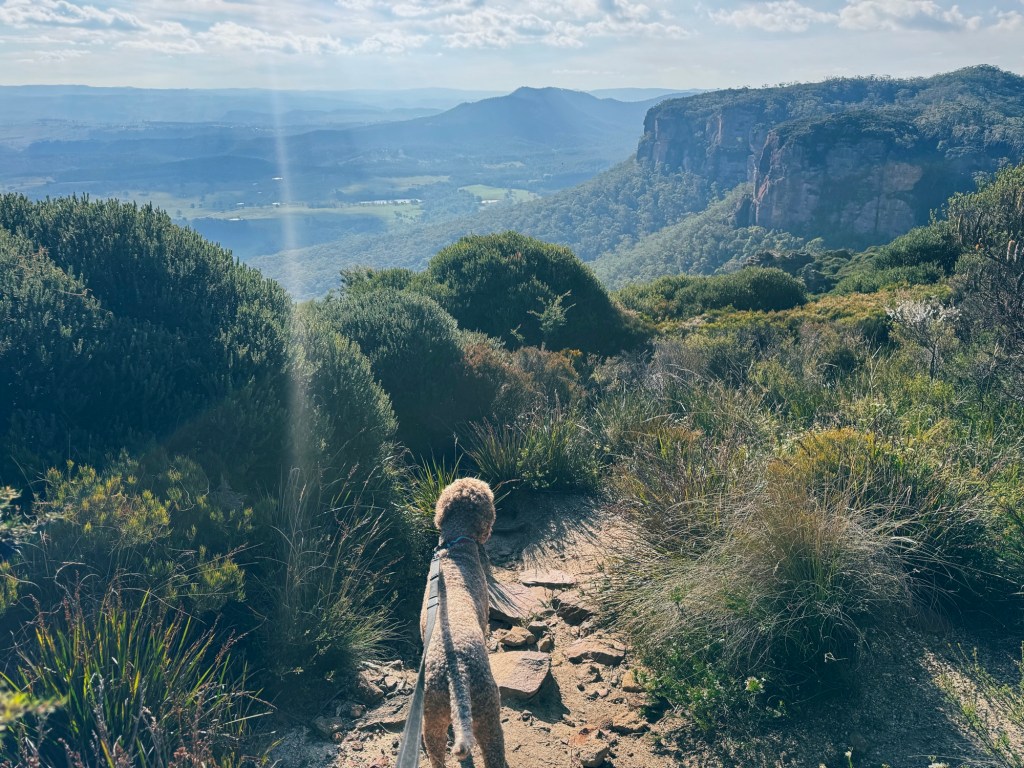
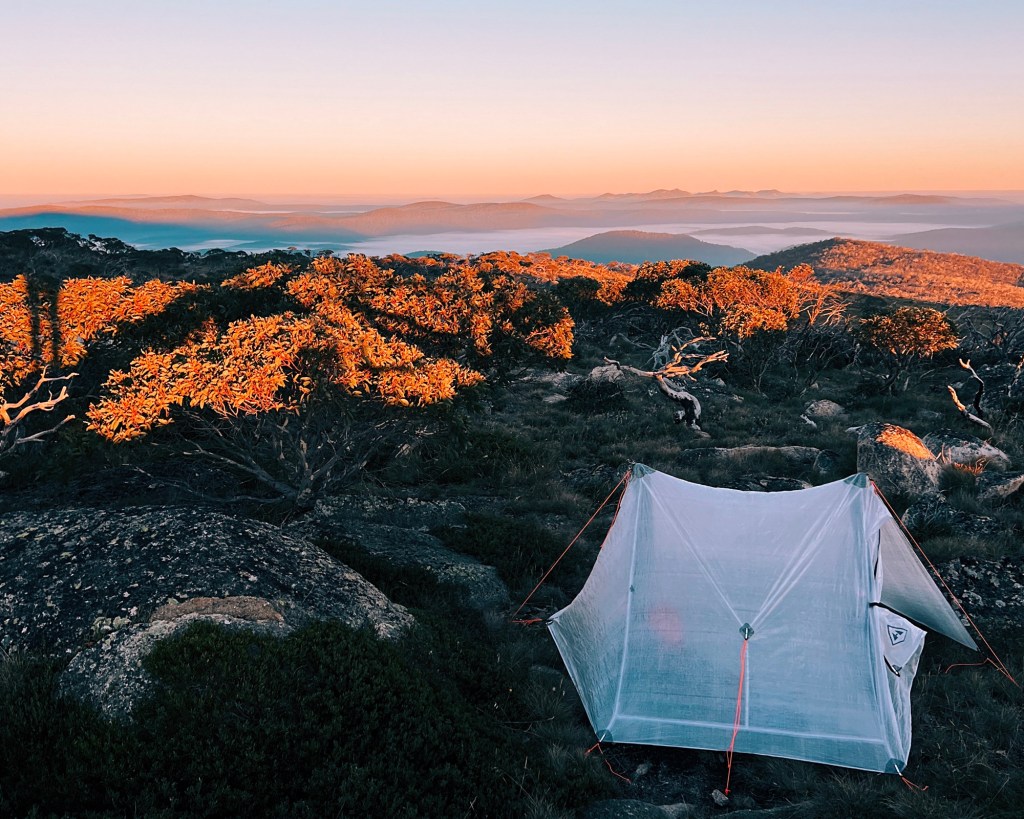
Start small. Let them get used to different surfaces; gravel, dirt, boardwalks, slippery rocks. Introduce them to the idea of camping by taking them car camping: the flapping tent, the crinkly sleeping mat, the weird noises at night. Bowie hates heights, full stop. I carried him across so many suspension bridges until he was about 3. These days, he’s mostly okay, but there’s still the occasional standoff when the trail gets too cliffy for his liking.
Also, don’t forget other animals; kangaroos, wombats, feral horses, echidnas. And while Bowie’s usually more of a lover than a chaser, I always keep him on a lead when we’re in wildlife territory. Speaking of…
4. Practice Good Trail Etiquette
Not everyone loves dogs. I know, I’m shocked too.
But seriously, even if your pup is the friendliest thing alive, it’s respectful (and often required) to keep them on a leash, especially in high-traffic areas or near wildlife. If you’re entering state forest or reserves double-check the dog rules some areas are strictly no-dog zones due to baiting programs or sensitive ecosystems. Almost all national parks in New South Wales are not dog friendly, I don’t know about the rest of Australia, so check your local area before you hit the trail.
Poop bags (or a trowel) are a must, and if your dog’s the type to bark nonstop in a tent maybe ease into those quieter, less trafficked trails first.
5. Build up the Distances
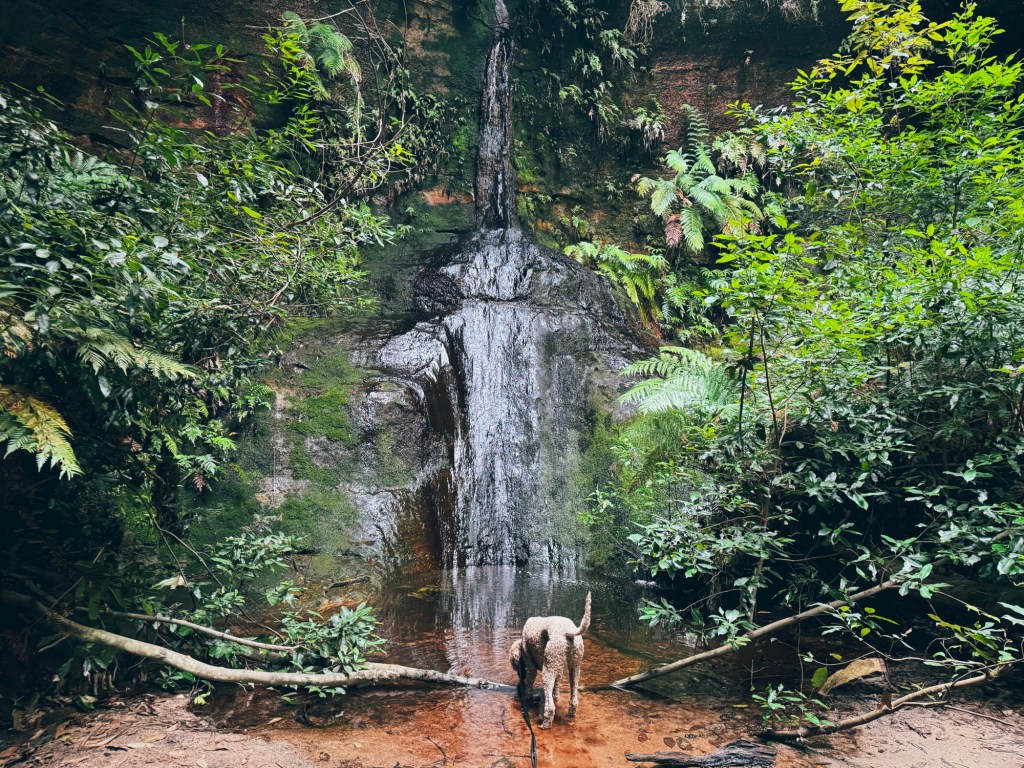
Just like us, dogs need to build up their fitness. You wouldn’t take your mate who’s never left the couch and drag them on a 30km hike (well, maybe I would..). Start with shorter walks, then gradually build the mileage. Watch their energy levels, keep water breaks regular, and keep an eye out for signs of fatigue: lagging behind, limping, lying down mid-hike.
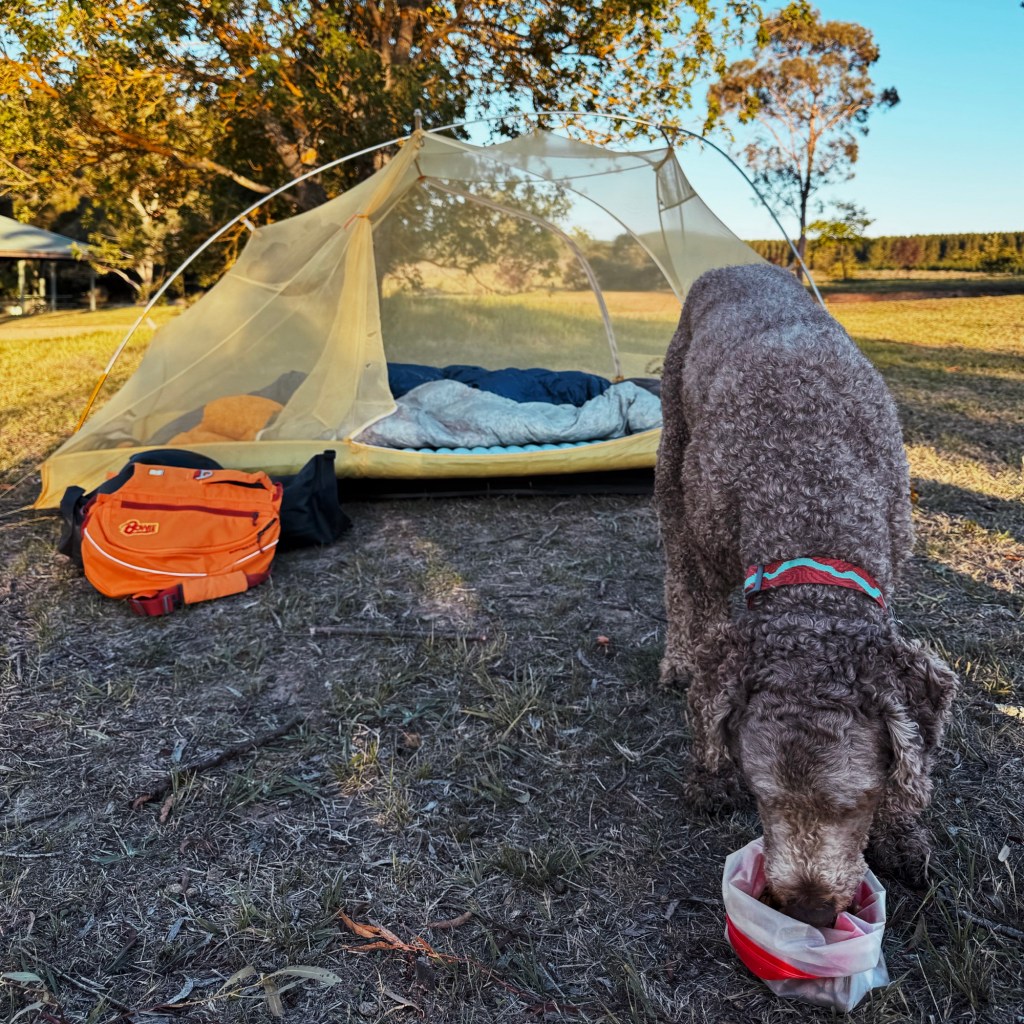
We pack extra snacks and water for Bowie. He gets extra treats on breaks, and we’ve trained him to drink from a collapsible bowl or direct from our bottles. Don’t push it. I’ve turned around mid-hike because Bowie looked too tired. Trust your gut and your dog.

6. Dog Overnight Hike Packing List
Here’s what I carry for my dog when we go on an overnight hike together:
- Doggy first aid: saline, gauze, bandages
- Collapsible bowl, or waterbottle with bowl attached
- Snacks/treats and extra water
- Poop bags or a trowel
- Leash (optional long line for around camp)
- Sit mat or bed (that their familiar with)
- Dog jacket or blanket (I give bowie my down jacket on cold nights)
- Towel (seriously, don’t forget this one)
Optional extras: booties (if the terrain is rough/snow)
Bowie has a dog backpack that we occasionally use on hikes. I’m careful not to overload it as it’s generally recommended that dogs carry no more than 10–15% of their body weight. For Bowie, that’s around 2.3kg. I usually put in his pack some food or snacks for the day, his water bowl, and a few poop bags in there for easy access. I carry everything else to keep things light for him.
7. Risks to be Aware of on Trail
We live in the land of “everything wants to kill you,” and unfortunately, that includes stuff that’s dangerous to our dogs.
- 1080 bait: It’s used for pest control alot in State Forests and is fatal to dogs. It is never done directly on the trail, and signs are often posted in the area. If you stay on trail, and keep your dog close by, it is not an issue.
- Snakes: This is one of my biggest fears when hiking with Bowie. We’ve come across three so far, and almost every time, he’s walked straight past them without even noticing, only for me to spot them as I go by. Honestly, I don’t have a magic solution here. My best advice is to stay alert and keep your eyes ahead on the trail. You can train your dog to be snake-aware, but I’ll admit, we’ve never tried.
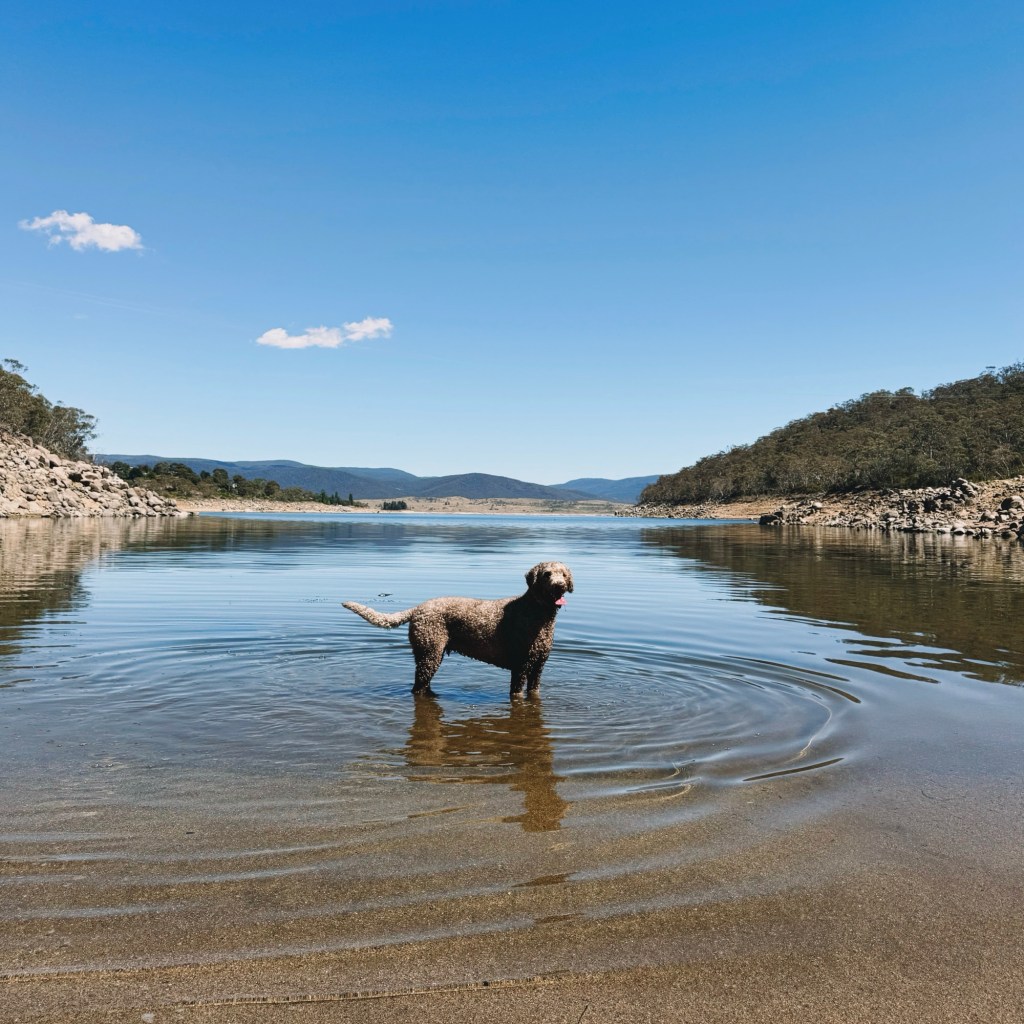
- Heatstroke: Dogs are not as efficient at cooling themselves down as humans. On hot days, we hike early or late, and if there’s no water for swimming, we keep it short and sweet.
Some Final Thoughts
Let me be clear: I’m not a dog trainer, and I’m definitely no canine expert. I’m just a person who loves my dog and loves being outside with him. These tips are what’s worked for us over the years and helped Bowie become the absolute legend of a trail dog that he is.
But just like people, every dog is different. Some thrive on adventure. Others would much rather curl up on the couch and snooze through the weekend. And that’s okay. You know your dog best, so take this as advice, not a rule book.
For me, there’s nothing quite like watching your best mate bound down the trail ahead of you, ears flapping in the breeze, tail wagging with pure joy. That’s when you know; you’ve found the perfect hiking partner.
Disclaimer: Content on Path & Pedal is for general information and inspiration only. I am a WildEarth ambassador, where WildEarth products are linked, an affiliate code has been used. All route guides and trip reports are based on personal experience and research at the time of writing. Conditions, access, weather, and regulations can change. Always check official sources and use your own judgment. Outdoor adventures carry risk, and Path & Pedal accepts no liability for injury, loss, or damage.
 Path & Pedal
Leave a comment